
One of the most common questions I get from friends who are new to skiing is, “How do I know what size skis to use?” It’s a great question, and it’s actually more important than you might think! The right ski length can make a huge difference in how quickly you learn, how much fun you have, and how confident you feel on the slopes.
I remember renting skis when I was first starting out and just trusting whatever the rental tech gave me. Sometimes it felt great, sometimes it felt like trying to turn a pair of telephone poles! Over the years, I’ve learned that ski length isn’t just about your height; it’s also about your ability level, weight, and even the type of skiing you want to do.
Don’t worry, you don’t need to be a ski expert to figure this out. I’ve put together a simple guide to help you understand the basics so you can make an informed choice, whether you’re renting or buying your first pair of skis.
The Basic Rule of Thumb (The “Chin Rule”)
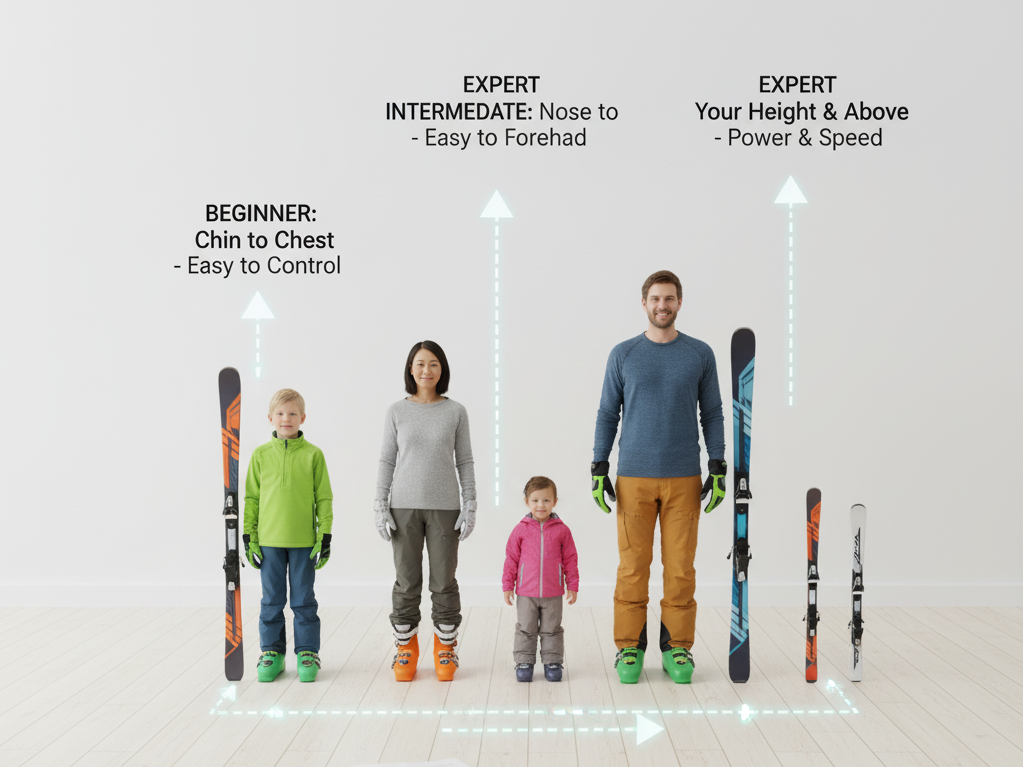
For most recreational skiers, a good starting point for ski length is somewhere between your chin and the top of your head.
Shorter skis (closer to your chin): Easier to turn, more forgiving, and great for beginners.
Longer skis (closer to the top of your head, or even a little above): More stable at high speeds, better for carving, but require more effort to turn.
This “chin rule” is a quick visual, but let’s dive into the details that truly refine your choice.
Factors That Influence Your Ideal Ski Length
When you’re at the rental shop or looking to buy, here are the key things to consider:
1. Your Ability Level (This is the BIGGEST Factor!)
Beginner:
Recommendation: Skis that come up to your chest or chin.
Why: Shorter skis are much easier to control and turn. They forgive mistakes, help you learn faster, and boost your confidence. My first pair of skis were definitely on the shorter side, and it made such a difference in how quickly I felt comfortable.
Intermediate:
Recommendation: Skis that come up to your nose or forehead.
Why: As you gain confidence and start linking turns consistently, you can move to slightly longer skis. These will offer more stability at moderate speeds and help you carve more effectively. You’ll feel more in control as you start to pick up speed.
Advanced/Expert:
Recommendation: Skis that are your height or even a bit taller than you.
Why: Longer skis provide maximum stability at high speeds, powerful carving, and better performance in varied terrain like bumps or powder. They demand more effort but reward you with precision and speed.
2. Your Height
This is the obvious starting point, but it’s refined by the other factors. Generally, taller people will lean towards longer skis within their ability range, and shorter people towards shorter skis.
3. Your Weight
Heavier skiers often find that slightly longer skis provide better stability and support. Lighter skiers, on the other hand, might prefer slightly shorter skis for easier maneuverability. If you’re at the lighter end of the spectrum for your height, you might go with a shorter ski; if you’re heavier, a longer one.
4. Type of Skiing You Plan to Do
All-Mountain Skiing (Most Common): If you’re going to ski a mix of groomed runs, a bit of powder, and maybe some bumps, use the guidelines above based on your ability. These skis are designed to be versatile.
Powder Skiing: For dedicated powder days, many skiers opt for slightly longer skis. The added surface area helps you float on top of the deep snow. These skis also tend to be wider.
Park & Pipe Skiing: Skiers who spend time in the terrain park often choose shorter skis for easier spins, jumps, and rails. They also look for “twin tip” skis (upturned tails) that allow them to ski backward.
Racing/Carving: For high-speed, aggressive carving on groomed trails, longer, narrower skis with a stiffer flex are often preferred for maximum edge hold and stability.
Don’t Be Afraid to Ask for Help!
When you go to a ski rental shop, the technicians are experts. Tell them:
Your height and weight.
Your experience level (first-timer, skied a few times, comfortable on blues, etc.).
Where you plan to ski (groomed trails, off-piste, park).
They will use this information to recommend the perfect ski length and model for you. Don’t be shy about asking questions or even trying a different length if the first pair doesn’t feel right. I always appreciate a good rental tech who takes the time to get me set up properly.
My Personal Takeaway: Start Shorter, Go Longer Later
If you’re just starting out, or even if you’re an intermediate looking to improve, I usually recommend erring on the side of slightly shorter skis. It will make learning easier and more enjoyable, which is the most important thing! As you build confidence and skill, you can always go for a longer pair next time.
Happy skiing, and may your turns be effortless and your skis perfectly sized!