Your Ultimate Guide to Renting Ski or Snowboard Gear in Colorado
There’s nothing quite like the crisp mountain air, the dazzling white snow under a brilliant blue sky, and the thrill of gliding down a slope in Colorado. Whether you’re a seasoned powder hound or dreaming of your very first turns, getting out on the slopes is an experience that truly captures the spirit of the Rockies. For many, the first step to this amazing adventure is figuring out your equipment. That’s why I want to share my best tips on how to rent ski or snowboard gear in Colorado, making your trip as smooth and fun as possible.
I remember my first few trips to Colorado ski country. The thought of bringing my own gear, or even buying it, felt like a huge commitment. Lugging skis, boots, and poles through airports or strapping them onto my car for a long drive seemed like too much effort for a weekend getaway. That’s when I discovered the magic of renting, and it completely changed my approach to mountain trips. Colorado has an incredible setup for rentals, and once you get the hang of it, you’ll see why it’s such a popular option.
Why Rent Your Gear? A Personal Perspective
For me, renting gear has always been about convenience and flexibility. I love trying different resorts, and sometimes a snowboard feels right, other times skis call my name. Renting allows me to switch it up without owning a whole garage full of equipment. It’s also fantastic for beginners. You don’t know if you’ll love skiing or snowboarding until you try, and renting lets you experiment without a significant financial outlay. Plus, imagine this: you fly into Denver, grab a shuttle, and boom, your gear is waiting for you at the resort or in a nearby town. No baggage fees for oversized items, no wrestling with ski bags. Pure bliss!
I’ve also found it’s excellent for families. Kids grow so fast, and buying new boots and skis every season can get expensive. Renting lets them have properly sized gear every single year, which is crucial for safety and enjoyment. It truly is the best way to get started and keep enjoying the Colorado slopes without the commitment of ownership.
Understanding Your Rental Options: Where to Find Gear
When you’re looking for how to rent ski or snowboard gear in Colorado, you’ll quickly learn that you have several great choices. Each option has its own perks, and I’ve tried them all over the years.
On-Mountain Rental Shops: Ultimate Convenience
These are the shops located right at the base of the ski resort, sometimes even inside the main lodge or a hotel. Think Vail, Breckenridge, Aspen, Winter Park, Keystone, Copper Mountain, Steamboat – nearly every major resort has multiple rental locations.
- Pros:
- Unbeatable Convenience: Pick up your gear, walk a few steps, and you’re on the lift.
- Easy Exchanges: If your boots feel off or you want to try a different ski model, swapping them out is quick and simple, often just a short walk away. I once had a binding issue at Breckenridge, and the shop fixed it in minutes without me having to leave the mountain.
- Storage: Many offer overnight storage, so you don’t have to carry your gear back to your lodging.
- Cons:
- Higher Prices: Generally, on-mountain rentals are the most expensive option.
- Crowds: Peak times (morning, especially weekends and holidays) can mean longer lines.
Off-Mountain Rental Shops: Value and Variety
These shops are located in towns surrounding the resorts, or even further down the I-70 corridor in cities like Denver and Boulder. Mountain towns like Frisco, Silverthorne, Dillon, Durango, and Steamboat Springs are absolutely packed with these independent rental stores.
- Pros:
- Better Value: Often significantly cheaper than on-mountain options.
- Less Crowded: You can often pick up your gear the evening before your ski day, avoiding the morning rush entirely. This is my go-to strategy! I love picking up my gear in Frisco on a Friday evening before heading up to Copper Mountain or Vail on Saturday. It saves so much time.
- Expert Staff: Many of these shops are locally owned and operated, with staff who are passionate about skiing and snowboarding and can offer fantastic local advice.
- More Options: Sometimes, these shops carry a wider variety of brands and types of skis or snowboards.
- Cons:
- Less Convenient: You have to transport your gear to and from the resort yourself. If you’re relying on a shuttle or public transport, this can be a bit tricky.
- Exchanges Can Be a Hassle: If you need to swap gear, you have to drive back to the shop, which can eat into your ski time.
Online Rental Services & Delivery: Modern Convenience
A newer option gaining popularity involves booking your rentals entirely online, sometimes even having the gear delivered directly to your lodging. I’ve heard great things about this for groups or families who want to avoid any hassle. Some services even provide a mobile fitting right at your hotel or condo.
- Pros:
- Ultimate Convenience: No shop visits required! Your gear comes to you.
- Pre-Booked Assurance: Know your gear is ready and waiting.
- Custom Fitting: Many offer fitting services at your accommodation.
- Cons:
- Limited Flexibility for Swaps: While some offer mobile support, it might take longer to exchange gear than walking into an on-mountain shop.
- Availability: Not all areas have this service yet, or during peak times it can be fully booked.
The Step-by-Step Rental Process: What to Expect
No matter where you choose how to rent ski or snowboard gear in Colorado, the general process is fairly consistent. I always recommend reserving your gear ahead of time, especially during peak season or holidays. It saves so much time and guarantees you’ll get what you need.
- Reservation (Highly Recommended):
- Go online or call your chosen shop.
- You’ll usually provide dates, location, and some basic info for each person (height, weight, shoe size, and estimated ability level). Don’t worry if you’re not sure about your ability; they’ll help you figure it out.
- Arrival and Check-In:
- When you arrive at the shop (or when the delivery service comes to you), you’ll confirm your reservation and complete any remaining paperwork.
- They’ll usually have you sign a waiver and provide payment information.
- Measurements and Ability Assessment:
- The staff will ask for your height, weight, and shoe size (bring the socks you plan to ski/snowboard in!).
- They’ll also ask about your ability level. Be honest here! It’s better to underestimate slightly than overestimate. This helps them set your bindings correctly for safety. My first time, I sheepishly admitted I was a “total beginner,” and they were so helpful in guiding me.
- They’ll ask about your preferred style: skis or snowboard.
- Boot Fitting: The Most Crucial Step!
- This is where you should take your time. Boots are the most important piece of gear. Ill-fitting boots can ruin your day with discomfort or even cause injury.
- Try on a few pairs if needed. Your toes should lightly touch the end when you stand up straight, and pull back slightly when you bend your knees into a ski or snowboard stance.
- Make sure your heel stays put when you flex forward. Don’t be shy about walking around in them for a few minutes to get a feel.
- I can’t stress this enough: good boot fit is everything!
- Ski or Snowboard Selection:
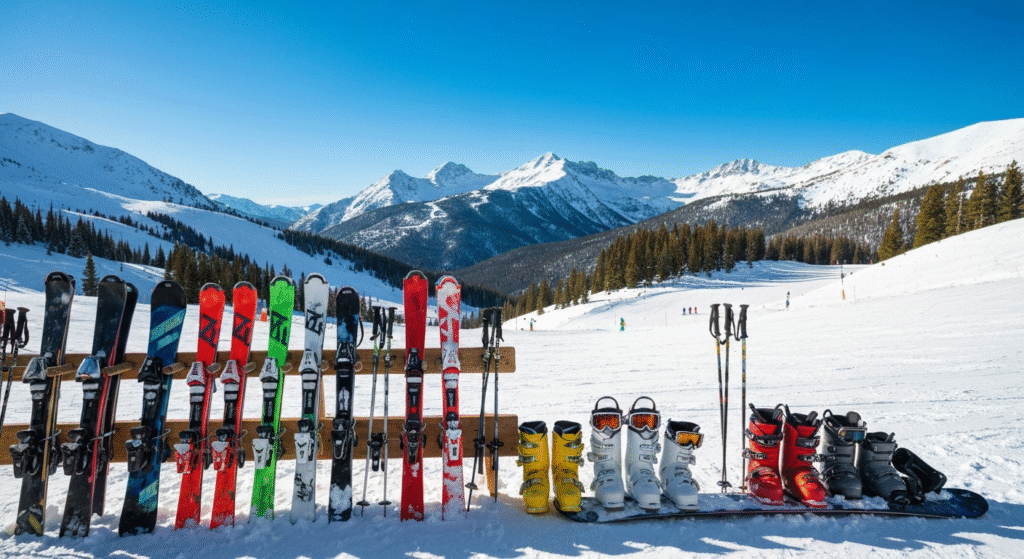
- Based on your ability, height, and weight, the staff will select appropriate skis or a snowboard.
- For beginners, shorter, more forgiving skis or snowboards are common. More advanced riders might get stiffer, longer equipment.
- They’ll set the bindings on your skis or the stance on your snowboard.
- Helmet and Pole Selection:
- Most rentals now include a helmet, and I always recommend wearing one for safety. Make sure it fits snugly but comfortably.
- Skiers will also get poles, sized to their height.
- Final Check:
- Before you leave, quickly double-check that you have all your items: skis/snowboard, boots, poles (if skiing), and helmet.
- Ask any last-minute questions you might have about operating the bindings or any other aspect of the gear.
My Top Tips for a Fantastic Rental Experience
Having rented countless times across Colorado, I’ve gathered a few personal insights to make your experience even better.
- Book Ahead: I’ve already mentioned it, but it’s worth repeating. Especially for weekends and holidays, booking online or by phone ensures you get the gear you want and speeds up the pickup process.
- Know Your Ability (Honestly!): Be truthful about your skill level. The staff isn’t judging; they’re trying to set you up safely and appropriately. Beginner gear is designed to be forgiving and help you learn. Don’t try to get “expert” skis if you’re still learning to stop!
- Wear the Right Socks: Bring the thin to medium-thickness ski or snowboard socks you plan to wear. This ensures the best boot fit. Avoid thick, bulky socks, as they can cause pressure points and actually make your feet colder.
- Don’t Be Afraid to Ask Questions: If something feels off, or you don’t understand how a binding works, ask! The rental shop staff are there to help.
- Check Your Gear: Before you leave the shop, do a quick visual check. Are the bindings secure? Are there any obvious issues with the edges of the skis/snowboard? Most shops keep their gear in excellent condition, but a quick look never hurts.
- Understand Return Policies: Know when and where you need to return your gear. Some shops allow after-hours returns; others have strict closing times.
- Consider Rental Insurance: Many shops offer insurance against damage to the equipment. For a small fee, it can provide peace of mind, especially if you’re new to the sport. I always weigh this option, especially if I’m planning on exploring some more challenging terrain.
Colorado-Specific Rental Spotlights and Anecdotes
When it comes to how to rent ski or snowboard gear in Colorado, the options are truly abundant. I’ve had some memorable experiences at various locations:
I remember one time I was heading to Keystone and decided to rent in the town of Dillon beforehand. The shop staff were so friendly, chatting with me about the best runs at Keystone while fitting my boots. It felt less like a transaction and more like getting advice from a local friend. Plus, I saved a good chunk of change compared to what I would have paid at the resort itself.
Another fantastic experience was renting in Denver before driving up to Winter Park. Picking up my gear at a shop just off I-70 meant I completely bypassed the morning rush at the resort. By the time I arrived, I was ready to hit the slopes without any delay. It made for a much more relaxed start to my day.
For those visiting Aspen, there are incredible shops both in Aspen proper and in Snowmass Village. While on-mountain might be more expensive, the sheer convenience of stepping out of your rental shop and onto the gondola is something truly special. I once opted for the on-mountain rental there just for that luxury – sometimes it’s worth it for the seamless experience!
Cost Considerations for Renting Gear
The cost of renting ski or snowboard gear in Colorado can vary significantly. A basic ski or snowboard package (skis/snowboard, boots, poles/bindings, helmet) can range from around $30-$50 per day at off-mountain shops to $50-$90+ per day at on-mountain locations. Longer rental periods often come with a lower daily rate.
- Multi-Day Discounts: Most shops offer discounts if you rent for multiple days.
- Package Deals: Often, renting the full package (skis/board, boots, helmet) is cheaper than renting items individually.
- Seasonal Rentals: If you plan to ski frequently throughout the winter, some shops offer seasonal rentals, where you keep the gear for the entire winter at a flat rate. This can be a fantastic option for locals or those spending extended periods in Colorado.
- Demo Gear: Many shops also offer “demo” packages, which allow you to try out high-performance, current-year model skis or snowboards. These are usually more expensive but can be a lot of fun for experienced riders wanting to test new equipment.
Packing Essentials Beyond Your Rental Gear
While renting your main equipment simplifies things, remember you’ll still need to bring a few personal items to truly enjoy your time on the mountain:
- Layers: Colorado weather can change quickly. Bring moisture-wicking base layers, a warm mid-layer (fleece or puffy jacket), and a waterproof/windproof outer shell.
- Goggles: Essential for protecting your eyes from sun, wind, and snow.
- Gloves or Mittens: Waterproof and insulated are key!
- Warm Hat or Balaclava: For extra warmth under your helmet.
- Ski/Snowboard Socks: As mentioned, one good pair is all you need inside your boots.
- Sunscreen and Lip Balm: The sun at altitude is intense!
- Small Backpack: Useful for carrying water, snacks, and extra layers on the mountain.
Getting your gear sorted out should be the least of your worries when planning a Colorado ski or snowboard trip. With so many fantastic options for how to rent ski or snowboard gear in Colorado, you can easily find a solution that fits your budget and convenience needs. My hope is that these tips empower you to confidently step into any rental shop and then confidently step onto the magnificent slopes that Colorado offers. The mountains are calling, and your perfect day on the snow awaits!