
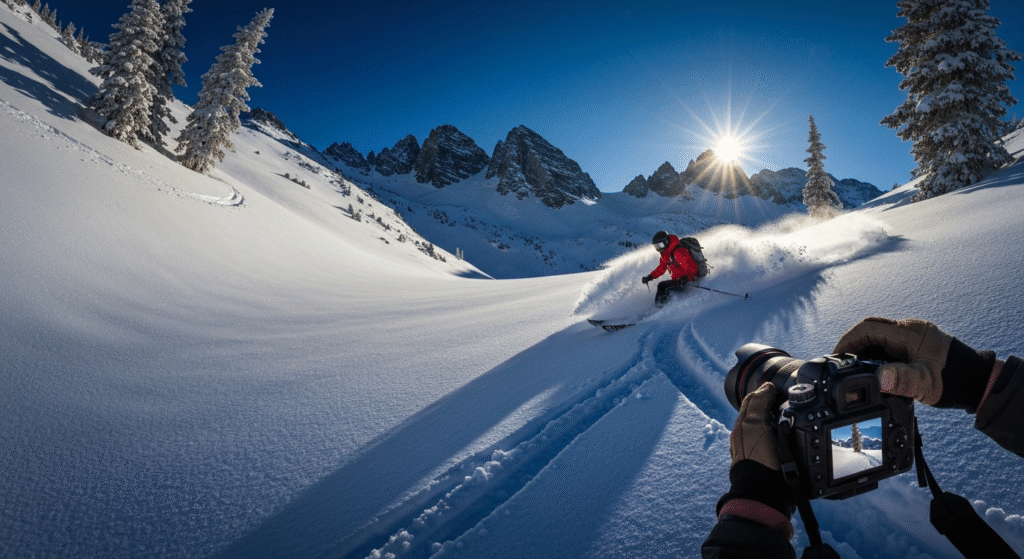
My Journey Behind the Lens in the High Country
I remember standing at the summit of Peak 8 in Breckenridge during a crisp January morning. The sun was just starting to peek over the jagged edges of the Continental Divide, turning the snow into a sea of sparkling diamonds. I pulled out my camera, hoping to capture the magic, but the result was a flat, gray image that looked nothing like the beauty before me. That moment sparked my obsession with learning How to Take Amazing Ski Photos in Colorado. I’ve spent years since then dragging my gear up chairlifts and through powder stashes to figure out exactly how to make the Rockies look as grand as they feel in person.
Colorado offers a playground unlike any other for photographers. From the legendary “Champagne Powder” of Steamboat to the dramatic cliffs of Telluride, the variety of terrain gives us endless chances to snap the perfect shot. But shooting in the snow comes with its own set of hurdles. The light is bright, the air is freezing, and everything moves fast. I want to share the tips and tricks I’ve picked up along the way so you can bring home photos that actually do justice to your mountain adventures.
Chasing the Golden Light in the Rockies
One of the most important things I’ve learned about How to Take Amazing Ski Photos in Colorado is that timing is your best friend. In the mountains, the sun behaves differently. Because of the high altitude, the light is incredibly harsh during the middle of the day. This often leads to dark shadows on faces and “blown out” white snow that loses all its texture. I always try to head out for the first chair or stay until the very last run of the day.
The “Golden Hour” in places like Vail or Aspen is truly magical. When the sun hangs low, it casts long, blue shadows across the moguls and bathes the peaks in a warm, orange glow. If you are at Copper Mountain, the way the light hits the Tenmile Range in the late afternoon is a dream for any photographer. I find that shooting with the sun to my side helps show the depth of the snow, making the mountains look massive and textured rather than flat and boring.
Mastering Your Exposure Settings
The biggest problem I faced early on was my camera getting tricked by the snow. Cameras are designed to see “middle gray,” so when they see a big field of bright white snow, they try to darken the image to compensate. This is why so many ski photos look dingy and gray. To fix this, I learned to use exposure compensation. I usually bump my exposure up by one or two stops. This tells the camera, “Yes, it really is this bright!” and keeps the snow looking clean and white.
I also suggest keeping an eye on your shutter speed. Skiing is a fast sport. If you want to freeze the spray of snow coming off a skier’s edges, you need a very fast shutter speed. I aim for at least 1/1000th of a second. This ensures that every individual ice crystal is sharp and clear. On the other hand, if I want to show the speed and motion, I might slow it down and move my camera along with the skier, creating a blurred background that feels like you’re flying down the hill.
Best Colorado Spots for Your Gallery
When you are looking for How to Take Amazing Ski Photos in Colorado, where you go is just as important as how you shoot. Every resort has a particular “hero shot” that defines the experience. I have a few personal favorites that never fail to provide a stunning backdrop.
- Vail: The Back Bowls. There is nothing quite like the vast, open expanses of the Back Bowls. Standing at the top of Sun Down Bowl, you can capture the sheer scale of the terrain. I love getting a shot of a lone skier making tracks against that massive white bowl.
- Telluride: The Town View. For me, the most iconic shot in the state is looking down onto the town of Telluride from the top of the mountain. The box canyon creates a dramatic frame that looks like a toy village nestled in the peaks.
- Aspen Highlands: The Highland Bowl. If you are willing to hike for your photo, the top of the Highland Bowl offers a view of the Maroon Bells that is hard to beat. The symmetry of those peaks is a gift for any photographer.
- Crested Butte: The Butte itself. The sharp, rocky peak of Crested Butte provides a rugged, dramatic background that looks incredible in action shots, especially when the light hits the “Teocalli” side in the morning.
The Secret of the Bluebird Day
We are lucky in Colorado to have so many clear, sunny days. A “bluebird day” is the gold standard for How to Take Amazing Ski Photos in Colorado. The contrast between a deep indigo sky and bright white snow is naturally striking. I often use a circular polarizer on my lens during these days. It works like sunglasses for your camera, cutting down the glare from the snow and making the blue sky look even richer. It also helps capture the details in the clouds, which can add a lot of drama to a mountain vista.
Capturing the Action Without Losing Your Cool
Getting a great action shot takes more than just pointing and clicking. I’ve found that communication is key. Before my friends drop into a run, I’ll ski down a little bit and find a spot where the terrain looks interesting. I look for a “lip” or a sharp turn where I know they will kick up some snow. I tell them exactly where I want them to turn. “Hit that patch of powder right by the pine tree!” I’ll shout. This helps me frame the shot before they even start moving.
I also like to get low to the ground. By crouching down in the snow, I make the mountain look steeper and the jumps look higher. It puts the viewer right in the middle of the action. Just be careful not to get run over! I’ve had a few close calls at Steamboat when my buddies got a little too excited about the “Champagne Powder” and almost took me out while I was trying to get a low-angle shot.
Dealing with the Cold
The cold is the enemy of electronics. I’ve had many days where my phone or camera battery went from 80% to dead in a matter of minutes because of the biting Colorado wind. To prevent this, I keep my spare batteries in an inside pocket close to my body. My body heat keeps them warm and ready to go. I also use hand warmers. I’ll sometimes tape a hand warmer to the back of my phone or inside my camera bag to keep the gear from freezing up. It’s a simple trick, but it has saved my photo sessions more than once.
Composition and Storytelling
Taking a great photo isn’t just about the person skiing. It is about telling the story of the whole day. Sometimes my favorite photos from a trip aren’t the ones on the slopes, but the ones that capture the “vibe” of the Colorado ski life. I like to take photos of the frost on the gondola windows, the steam rising from a cup of cocoa at a mid-mountain lodge, or the tired but happy faces of my family in the parking lot at the end of the day.
When I am framing a shot, I think about leading lines. In the mountains, these are easy to find. Ski tracks in the snow are perfect for leading the eye toward a distant peak or a person in the distance. I also love using trees to frame a shot. A dusting of snow on the pine branches can act as a natural border, drawing the eye toward the center of the image. This is a great way to add depth to your pictures, making them feel more like a 3D experience than a flat image.
The Power of the Human Element
While I love a good mountain vista, adding a person into the frame gives the scene scale. Without a skier or a hiker, it is hard to tell how big those Colorado peaks really are. I try to wear bright colors when I know I’ll be in front of the lens, and I encourage my friends to do the same. A bright red or orange jacket pops beautifully against the white snow and blue sky. It makes the subject stand out and adds a splash of energy to the photo. This is a simple but effective part of How to Take Amazing Ski Photos in Colorado.
Editing Your Mountain Masterpieces
Once I get home and warm up my toes, the work isn’t quite finished. Editing is where I can really make the colors sing. I don’t like to over-process my photos, but a few small tweaks go a long way. I usually start by adjusting the white balance. Because snow reflects the blue sky, it often looks a bit too “cool” or blue in photos. I’ll warm it up just a touch to make the snow look more natural.
I also like to pull back the highlights. This helps bring back the detail in those bright white areas where the sun was hitting the hardest. If I’m editing a shot from a place like Winter Park or Keystone, I might boost the “clarity” a little bit to make the pine trees and rocky outcrops look extra sharp. The goal is to make the photo feel exactly how it felt when I was standing there in the cold, crisp air.
Final Thoughts from the Slopes
At the end of the day, the best camera is the one you have with you. Whether you are using a professional DSLR or just your smartphone, the mountains of Colorado provide the perfect canvas. I’ve found that the more I practice, the more I start to see the mountain in a different way. I look for the way shadows fall across the corduroy morning grooming, and I notice how the clouds wrap around the peaks of the Elk Range.
I hope these tips help you feel more confident the next time you head up the lift. Remember to keep your batteries warm, look for that golden afternoon light, and don’t be afraid to get a little snow on your knees to get the right angle. Taking amazing ski photos is all about capturing the joy and the scale of being out in the wild. Colorado is a special place, and there is nothing better than being able to share a piece of that magic with people back home through your lens. So, grab your pass, pack your camera, and I’ll see you out there on the mountain!