
The Enduring Legacy: Exploring The History of Skiing in Colorado
There’s a special magic that settles over Colorado when the first snowflakes begin to fall, a promise of crisp air, stunning mountain views, and the exhilarating rush of gliding down a powdered slope. For me, that feeling is deeply connected to something more profound: the deep roots and rich background of this winter pastime. It’s not just about fresh powder and speedy turns; it’s about understanding The History of Skiing in Colorado: Iconic Resorts and Innovations that shaped the sport we adore today.
Every time I click into my bindings and push off, I feel a connection to generations of skiers who came before me. Colorado didn’t just become a ski paradise overnight; it’s a story woven with the grit of pioneers, the ingenuity of inventors, and the vision of dreamers. Come along with me as we journey back through time to explore how this incredible state became synonymous with world-class skiing.
From Mining Camps to Mountain Playgrounds: The Early Days
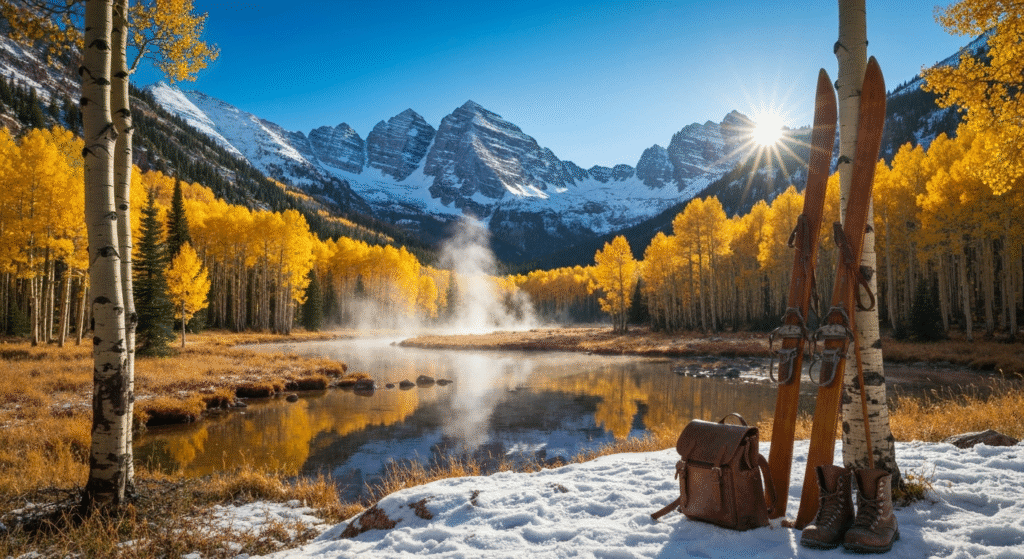
The story of skiing in Colorado begins not with fancy resorts, but with necessity. Long before chairlifts and heated gondolas, skis were a practical tool for survival. Miners and prospectors, often inspired by Norwegian immigrants who arrived seeking fortune, strapped on long wooden planks to traverse the snow-laden mountains in winter. They used them to get to their claims, deliver mail, and access remote outposts. These were crude instruments, nothing like the high-tech equipment we use today, but they worked. I often picture these tough individuals, bundled against the cold, making their way through silent, snowy expanses – a stark contrast to the lively base areas I know.
The first hints of skiing as a sport, rather than just transportation, began to appear in the late 19th and early 20th centuries. Towns like Leadville, Aspen, and Crested Butte held informal races and competitions. Imagine the excitement! People gathered to watch daring individuals hurl themselves down a hill, often on skis much longer than they were tall. These early events, though rudimentary, laid the foundation for the competitive spirit that still pulses through Colorado’s ski scene.
My first experience learning about this early period was during a trip to the Colorado Snowsports Museum in Vail. Seeing those old, wooden skis and leather boots, I felt a deep appreciation for how far we’ve come. It truly puts my modern gear into perspective!
The Post-War Boom: Resorts Take Root
World War II played an unexpected yet pivotal role in shaping The History of Skiing in Colorado: Iconic Resorts and Innovations. The famous 10th Mountain Division, an elite mountain warfare unit, trained extensively in the rugged terrain near Leadville and Aspen. These soldiers, many of whom were accomplished skiers themselves, returned from the war with a passion for mountain life and the skills to create new winter playgrounds. They envisioned a future where mountains weren’t just for work, but for recreation. Many of them became founders, developers, and instructors at the resorts that would soon grace Colorado’s peaks.
Aspen: A Silver Mining Town’s Transformation
One of the earliest and most iconic resorts to truly flourish was Aspen. Once a booming silver mining town, its fortunes waned until the vision of pioneers like Walter Paepcke and Friedl Pfeifer saw its potential as a world-class ski destination. In 1946, the Aspen Skiing Company was founded, and the first chairlift on Aspen Mountain (Ajax) began operation. I love visiting Aspen and feeling that blend of old-west charm and modern luxury. You can still see hints of its mining past mixed with sleek, contemporary architecture.
Vail: Born from a Dream
Perhaps no resort embodies the spirit of post-war ski development quite like Vail. Unlike many resorts that grew out of existing towns, Vail was purpose-built from scratch in 1962 by Pete Seibert, a veteran of the 10th Mountain Division, and local rancher Earl Eaton. They discovered the incredible Back Bowls, a vast expanse of open terrain, and knew they had found something special. What started as a small village with a few lifts quickly grew into one of the largest and most renowned ski resorts in North America. When I first experienced Vail’s Back Bowls, I remember being absolutely awestruck by their sheer scale and beauty, understanding why it was a cornerstone of Seibert’s vision.
Steamboat Springs: Western Heritage on Skis
Further north, Steamboat Springs boasts a distinct Western flavor. Skiing here has a long background, with the first ski jumps appearing in the early 1900s. It’s often called “Ski Town, USA,” and with good cause; it has produced more U.S. Olympians than any other town. The resort, now known for its Champagne Powder®, grew steadily throughout the mid-20th century. Every time I visit Steamboat, the friendly atmosphere and the distinct “yee-haw” vibe remind me of its unique blend of cowboy culture and ski expertise.
Winter Park and Breckenridge: Accessibility and Altitude
Other major resorts like Winter Park, originally opened in 1940 by the City of Denver, and Breckenridge, which began operations in 1961, also played crucial roles in shaping The History of Skiing in Colorado: Iconic Resorts and Innovations. Winter Park was a pioneer in offering skiing to the masses, easily accessible by train from Denver. Breckenridge, another former mining town, found new life as a ski resort, preserving its Victorian charm while offering incredible high-altitude skiing. I particularly love wandering Breckenridge’s historic Main Street after a day on the slopes; it’s like stepping into a postcard from the past.
Innovations on the Slopes: Making Skiing Accessible and Fun
The growth of Colorado skiing wasn’t just about building resorts; it was also about constant innovation that made the sport safer, more accessible, and more enjoyable for everyone. These technological leaps are a core part of The History of Skiing in Colorado: Iconic Resorts and Innovations.
- The Evolution of Lifts: From simple rope tows and T-bars, the progression to modern chairlifts, high-speed quads, and gondolas revolutionized how quickly skiers could ascend the mountain. Imagine having to hike up for every run! The invention of the detachable chairlift, which slows down for loading and unloading but speeds up on the line, was a game-changer for reducing wait times and increasing uphill capacity. I’m always amazed by the efficiency of these systems now, especially compared to the tales my grandparents tell of their early ski trips.
- Snowmaking: Initially a controversial idea, snowmaking technology has become essential. It allows resorts to open earlier, stay open longer, and maintain excellent conditions even when natural snowfall is light. This ensures a consistent ski season, something I certainly appreciate when planning my trips!
- Grooming Machines: Early grooming involved skiers side-stepping slopes or dragging logs. Today’s powerful snowcats, with their intricate blades and tillers, transform bumpy, churned-up snow into pristine corduroy. There’s nothing quite like that first run on a freshly groomed slope in the morning; it’s a testament to incredible engineering.
- Ski Equipment: The skis themselves have seen incredible transformations. From long, heavy wooden planks to shorter, lighter fiberglass and composite skis with parabolic shapes, modern equipment has made turning easier and skiing more approachable for beginners. Boots went from leather lace-ups to stiff, comfortable plastic shells, and bindings evolved from simple straps to complex safety devices that release during a fall. My own progression from straight skis to shaped skis felt like unlocking a whole new level of control and fun.
The Modern Era and Beyond: A Continuing Story
As we look at The History of Skiing in Colorado: Iconic Resorts and Innovations, we also see a pattern of constant adaptation. The late 20th and early 21st centuries saw the consolidation of many ski resorts under larger corporations, leading to extensive capital improvements and the creation of multi-resort passes that changed how many people experience ski vacations. This has allowed for continued investment in infrastructure and experiences.
Today, Colorado skiing is not just about downhill runs. It encompasses backcountry touring, cross-country skiing, snowboarding, and a whole culture of mountain recreation. Resorts are also making efforts toward sustainability, recognizing the precious environment they operate within. It’s a compelling journey that continues to unfold.
My Reflections and Recommendations
For me, understanding the background of skiing in Colorado adds so much depth to my passion for the sport. When I visit an old mining town like Telluride or Crested Butte, I love imagining the hardy souls who first strapped on skis there, long before the first chairlift was even a dream. These towns, with their Victorian buildings and rugged surroundings, are living museums of ski history.
If you’re interested in connecting with this rich history, I have a few recommendations:
- Visit the Colorado Snowsports Museum in Vail: This small museum offers an excellent overview of the state’s ski history, with fascinating exhibits on equipment, fashion, and the pioneers who built the industry. It’s a true gem.
- Explore the Historic Districts: Spend time walking through the historic areas of Aspen, Breckenridge, or Telluride. You’ll get a real sense of the mining roots that often predate or intertwine with their ski heritage. Many old buildings now house restaurants and shops, adding to the charm.
- Ride a Slower Lift: At some resorts, you can still find older, fixed-grip chairlifts. Taking a ride on one offers a moment of reflection, a slower pace to appreciate the mountain and ponder how skiers once spent their entire day on similar, simpler conveyances. It’s a wonderful contrast to the speedy gondolas.
- Seek Out Historical Markers: Many resorts have plaques or signs detailing their origins and important milestones. Take a moment to read them; they often tell compelling stories of perseverance and vision.
The History of Skiing in Colorado: Iconic Resorts and Innovations isn’t just a collection of facts; it’s a vibrant story of human endeavor, a testament to the enduring allure of the mountains, and a story that continues to write itself with every new snowfall. I feel lucky to be a part of its unfolding journey, carving my own tracks in a landscape shaped by so much heritage.