Starting Your Journey into the Colorado Backcountry
I still remember the first time I strapped on a pair of skins and headed into the trees near Berthoud Pass. The air was crisp, the silence was heavy, and the snow looked like a giant pile of powdered sugar. I felt a sense of freedom that I had never found at a resort. But as I looked up at the steep slopes above me, a tiny voice in my head started asking questions. Is this slope safe? What happens if that snow moves? Do I actually know how to use the beacon in my pocket? I realized very quickly that my love for the mountains needed to be matched by a deep respect for the snow. That realization is what led me to look for Avalanche Safety Courses and Resources in Colorado, and it was the best choice I ever made for my skiing life.
Colorado is famous for its incredible “cold smoke” powder, but our snowpack is also known for being a bit tricky. Unlike the heavier, wetter snow in places like Washington or Oregon, our snow stays light and airy, which can lead to layers that don’t always stick together well. This is why getting a proper education is so vital. I want to share my own path and the tools I use every single day to stay safe while enjoying the best terrain our state has to offer.
Finding the Right AIARE Level 1 Course
The first big step for anyone wanting to leave the groomed runs behind is the AIARE Level 1 course. This is the gold standard for beginners. When I took mine, I chose a three-day program that combined classroom learning with actual time on the snow. It was eye-opening. I learned how to read the layers of the snow, how to identify “avalanche terrain,” and how to move through the mountains in a way that minimizes risk. There are so many great places to take these Avalanche Safety Courses and Resources in Colorado, and I have a few personal favorites that I always recommend to my friends.
I took my first course through the Colorado Mountain School based in Estes Park. They are wonderful because they have access to incredible terrain in Rocky Mountain National Park. My instructor was a seasoned guide who had spent decades in these peaks. He didn’t just teach us out of a book; he showed us how to “feel” the snow and look for the red flags that nature gives us. Another fantastic option is the Silverton Avalanche School down in the San Juan Mountains. If you want to learn in some of the most rugged and beautiful terrain in the country, that is the place to be. They have a long history and a very hands-on approach that I find incredibly helpful.
Essential Gear for Your Safety Kit
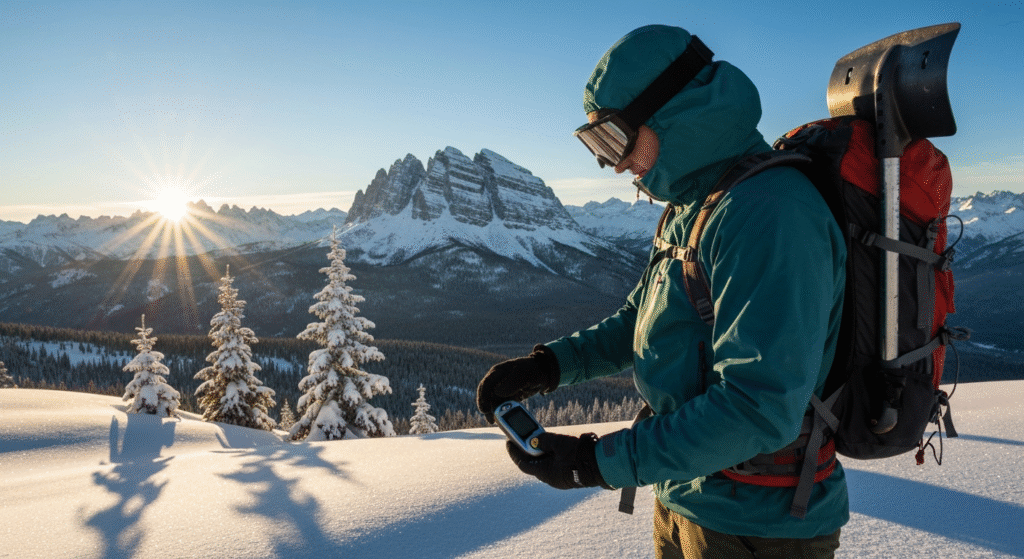
Before you even think about stepping into the backcountry, you need the “big three”: a beacon, a probe, and a shovel. I remember feeling a bit overwhelmed when I first walked into a shop to buy these. There are so many brands and models! But after my training, I understood what to look for. Your beacon should be a modern, three-antenna device that is easy for you to use even when your hands are shaking or you are wearing thick gloves. I personally use a Mammut Barryvox because the interface is very simple and the range is excellent.
Your shovel should be metal, not plastic. I learned that the hard way during a practice drill where a cheap plastic shovel simply couldn’t cut through the hard-packed snow we were testing. Your probe needs to be long enough to reach through deep Colorado drifts—I usually suggest at least 280cm or 300cm. Once you have this gear, you have to practice. I like to go to the “beacon parks” that many resorts like Breckenridge or Copper Mountain have set up. They are free to use and let you practice finding buried transmitters in a safe environment. It is a great way to keep your skills sharp throughout the season.
The Power of the Colorado Avalanche Information Center
One of the most important Avalanche Safety Courses and Resources in Colorado isn’t a class at all, but a website and an app. The Colorado Avalanche Information Center, or CAIC, is something I check every single morning before I even have my coffee. The forecasters there are heroes. They go out into the field, dig pits, and look at weather patterns to give us a daily danger rating for different zones across the state.
I have the CAIC app on my phone, and it is my constant companion. It tells you the danger level—Low, Moderate, Considerable, High, or Extreme—and breaks it down by elevation and aspect. For example, it might tell you that north-facing slopes at high elevations are particularly dangerous on a certain day. I use this info to plan my route. If the danger is “Considerable” on steep slopes, I find a nice, low-angle meadow to ski instead. Reading these reports daily, even when I am not going out, has helped me understand the patterns of our winter weather in a much deeper way.
Building a Trustworthy Backcountry Crew
You should never head out into the backcountry alone. I have a small group of friends that I trust with my life, and that is not an exaggeration. When we go out, we have a clear plan. We talk about where we are going, what we are seeing in the snow, and we always do a “beacon check” at the trailhead. This is where one person puts their beacon on “search” while everyone else walks past in “send” mode to make sure all the devices are working correctly.
Finding these partners can be a bit of a process. I found many of my best touring buddies by attending local events and talks. Shops like Neptune Mountaineering in Boulder or Bentgate in Golden often host guest speakers and “know before you go” nights. These are perfect places to meet people who are also looking for Avalanche Safety Courses and Resources in Colorado. It is much better to find someone who shares your level of caution than someone who just wants to “shred” without thinking about the risks.
Local Spots for Hands-on Learning
Colorado is blessed with some amazing places to practice what you learn in your courses. For those of us on the Front Range, Berthoud Pass is a classic spot. It offers a wide variety of terrain, from mellow trees to very steep chutes. I spent a lot of my early days here just practicing my uphill technique and observing how the wind affects the snow on the ridges. Another great area is Loveland Pass. Because it is so accessible, you can get a lot of “vert” in a short amount of time, but you have to be very careful because it is also very popular and can get crowded.
If you are looking for something a bit more managed, places like Bluebird Backcountry (when it was operating) or the uphill access at resorts like Arapahoe Basin are wonderful. “A-Basin” allows uphill travel during certain hours, and it is a safe way to get your heart rate up and test your gear without the same level of avalanche risk found in the deep wilderness. I love skinning up the mountain under the stars before the lifts start turning. It is a peaceful way to start the day and keeps my legs strong for the bigger weekend tours.
Continuing Your Education
The learning never really stops. After I felt comfortable with the skills from my Level 1 course, I decided to take a Rescue Fundamentals class. This was a one-day intensive focus on what to do if things actually go wrong. We practiced complex search scenarios and multiple burials. It was intense and exhausting, but it gave me a lot of confidence. I also highly recommend the AIARE Level 2 course if you find yourself wanting to lead trips or travel into more complex terrain.
There are also plenty of free online resources that are incredibly helpful. The “Know Before You Go” program has a great video series that covers the basics of avalanche safety in a very engaging way. I often re-watch these at the start of every season just to refresh my memory. Staying safe is about a mindset of constant learning and never becoming too cocky. The mountains don’t care how many years you have been skiing; they only care about physics and the strength of the snowpack.
Tips for Staying Safe Every Day
Whenever I head out, I follow a simple routine that keeps me grounded. First, I check the weather and the CAIC forecast the night before. Then, I check it again in the morning to see if anything changed overnight. I make sure my beacon has fresh batteries—I never let them get below 70 percent. I pack plenty of water, extra layers, and a small first aid kit. Most importantly, I tell someone exactly where I am going and when I expect to be back.
When I am on the snow, I am constantly looking for clues. Is there “whumpfing” (the sound of air escaping as a layer of snow collapses)? Are there recent avalanches on similar slopes? Is the wind blowing snow over the ridges and loading the slopes below? I have turned around many times because the snow just didn’t feel right. There is an old saying in the backcountry: “The mountain will be there tomorrow.” I live by that. There is no line or “stash” worth more than coming home to my family at the end of the day.
Why I Love This Community
The community of people who seek out Avalanche Safety Courses and Resources in Colorado is one of the best groups I have ever been a part of. We share a bond over our love for the high country and our commitment to keeping each other safe. Whether it is sharing a beer after a long day of touring or helping a stranger at the trailhead with their skins, there is a sense of camaraderie that you just don’t find everywhere else. By taking the time to get educated, you aren’t just protecting yourself; you are becoming a responsible member of this amazing community. I hope to see you out there on a skin track soon, enjoying the quiet beauty of a Colorado winter morning!
Top Colorado Providers for Avalanche Education
- Colorado Mountain School (CMS): Great for Front Range residents, offering courses in Estes Park and near the I-70 corridor.
- Silverton Avalanche School: Known for deep snow and expert instructors in the heart of the San Juan Mountains.
- Apex Mountain School: Offers excellent training near Vail and Beaver Creek.
- Rocky Mountain Guides: A fantastic option if you are based in the Aspen or Roaring Fork Valley area.
- Vail Mountaineering: Local experts who know the Eagle County backcountry better than anyone.
Taking a course is an investment in your future. It might seem like a lot of money upfront, but the knowledge you gain is priceless. I look back at my younger self, skiing out of bounds without a clue, and I shudder. Now, I feel empowered. I know how to make choices based on data and observation rather than just luck. If you are on the fence about signing up, just do it. Your future self will thank you every time you reach the bottom of a beautiful, safe run with a huge smile on your face.